
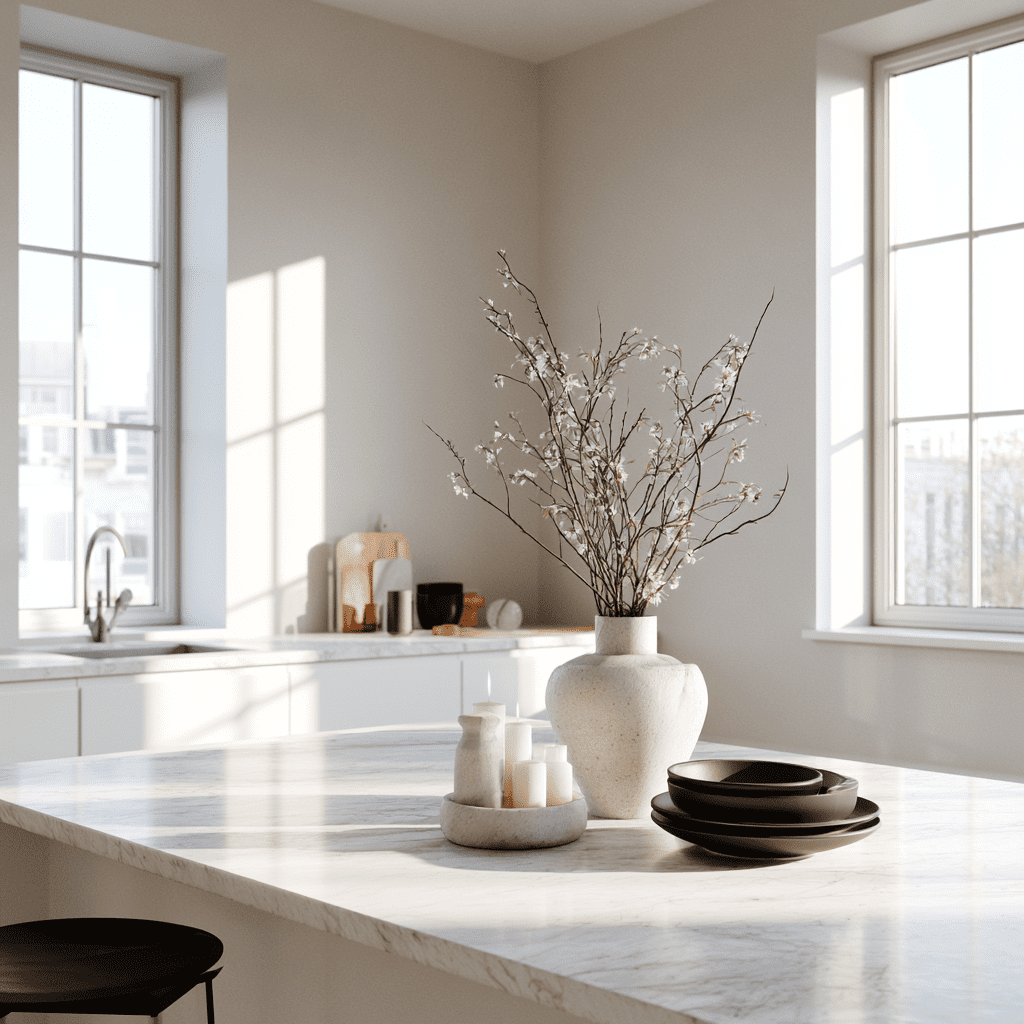
If you’re feeling overwhelmed, embracing minimalist home organization can be the key to reclaiming your peace. We often view home organization as a mundane domestic chore; however, studies show that cluttered spaces can significantly increase cortisol levels, making it significantly harder for the mind to focus, rest, or find creative flow.
By adopting a philosophy of minimalist home organization, you are not just clearing physical objects; you are liberating mental bandwidth that was previously occupied by “visual noise.
1. Visual Clutter and Cognitive Load
The human brain is constantly processing information from its surroundings. When your living spaces—particularly the kitchen—are filled with items you don’t need or use, your brain receives continuous, low-level signals to process that clutter. This creates a hidden “cognitive load” that exhausts your mental energy.
Organizing your space using minimalist principles allows your brain to shift into a state of rest. When your countertops are clear, and your tools are curated, the mental fatigue dissipates, replaced by the sense of “calm” that defines a well-lived home.
2. From "Storing" to "Purging": The Necessary Shift
A common misconception is that minimalist home organization is about buying more bins, baskets, and storage systems. The reality is quite the opposite. True organization begins with subtraction, not addition.
Before you spend time researching the best drawer dividers for a gadget you haven’t used in three years, ask yourself a vital question: Do I truly need this? The most effective organizational system is the one that requires the least amount of maintenance. By purging what doesn’t serve you, you simplify your daily routine at the source.
3. Creating "Breathing Space" (Negative Space)
In the world of Scandinavian design—a cornerstone of the Kitchen Calm aesthetic—we heavily rely on the concept of “negative space.” In art and design, this is the area around or between the subjects of an image.
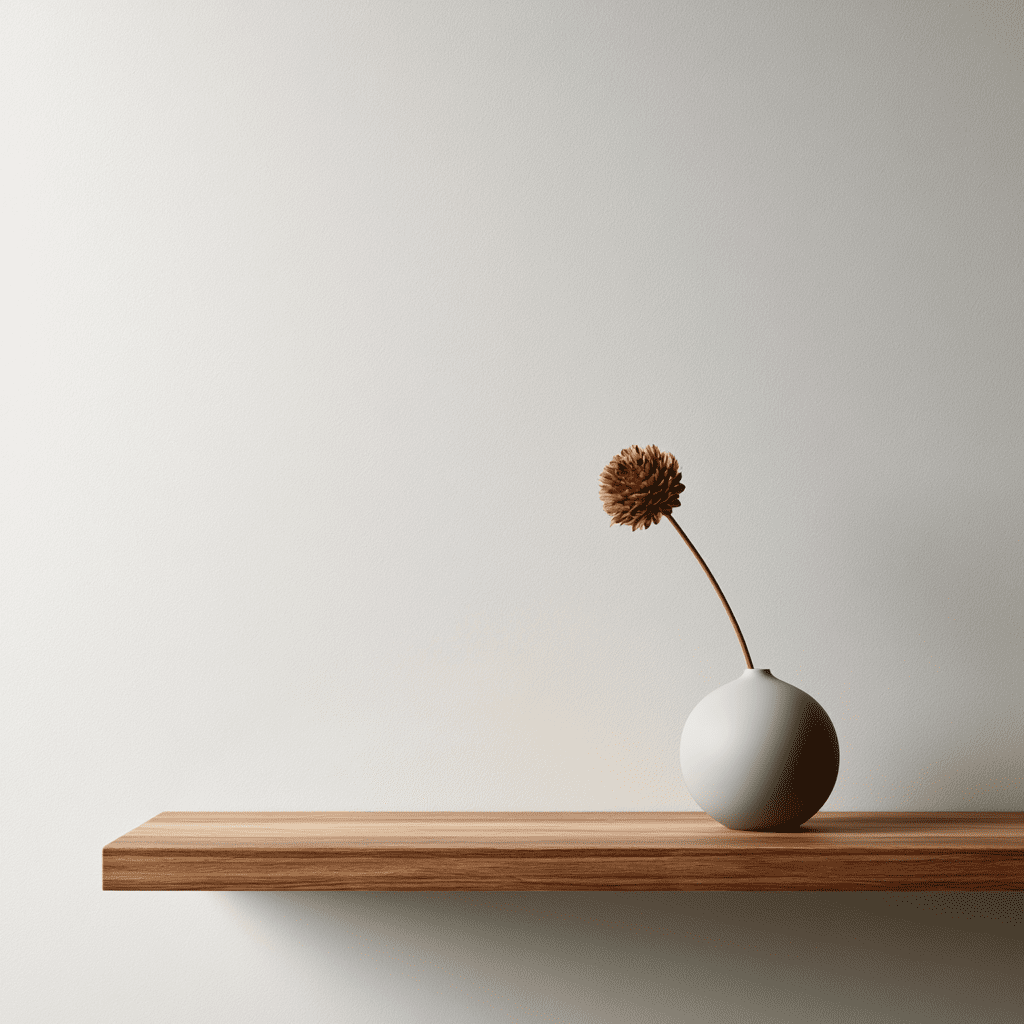
In your home, negative space is not “empty” or “wasted” space; it is a deliberate design choice that allows the eye—and the mind—to rest. When you intentionally leave sections of a shelf or a countertop empty, you permit yourself to breathe. It signals to your nervous system that it is safe to relax.
4. Achieving Sustainability with Minimalist Home Organization
Do not strive for a home that looks like a catalog. Strive for a home that works for your life. Minimalist home organization is about building a sustainable system that evolves with your daily habits.
The Power of the 15-Minute Reset
Implementing a minimalist home organization system doesn’t mean your home stays perfect forever without effort. It means you have a sustainable framework. Incorporating a 15-minute daily reset is the “glue” that keeps your system together. Each evening, take a quick walk through your main living areas. Put items back in their “homes,” clear the kitchen counters, and reset the cushions. This small habit prevents clutter from accumulating over the week, ensuring that your space remains a sanctuary. Remember, the goal of minimalist home organization is to spend less time cleaning and more time living. When you maintain this rhythm, you stop being a slave to your possessions and start being the master of your environment, allowing your mind to focus on what truly matters to you.
Transitioning from the psychological mindset of minimalist living to your daily cooking environment is the most impactful step you can take. A calm mind thrives in a calm space, especially in the heart of the home. If you are ready to take these principles and put them into practice with your cabinets, tools, and workflow, we have created the perfect roadmap for you. You can find our step-by-step strategy for a stress-free, functional cooking space in our complete guide to Kitchen Organization.
If your current system requires an exhaustive amount of energy to keep perfect, it is too complicated. Invest in high-quality, practical essentials and let go of the need for an “Instagram-perfect” setup. A home that supports your well-being is always more valuable than one that just looks good in a photo.